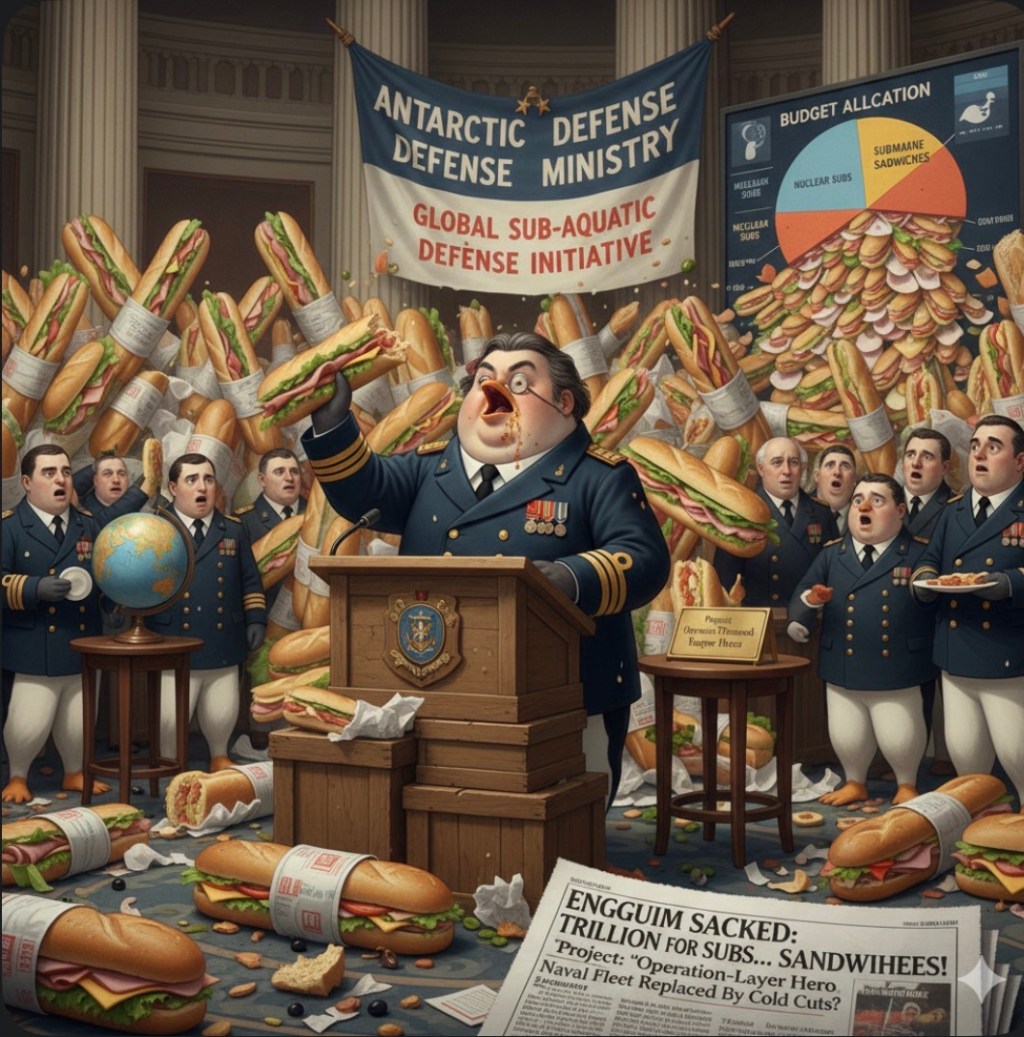
McMurdo Sound, Antarctica, Friday — In what experts are calling “the most expensive lunch order in human history,” Antarctica’s Defense Minister, Admiral Basil Crumbshaw, has been dismissed after reportedly spending 3.2 trillion Antarctic dollars on submarine sandwiches—not submarines, as initially authorized by Parliament’s Defense Appropriations Committee.
According to government insiders, the confusion began with a simple clerical mix-up when Crumbshaw, known for his “enthusiastic relationship with bread,” misread the procurement directive labeled “SUBMARINES (NUCLEAR)” as “SUBMARINE SANDWICHES (NUCLEAR OPTIONS).”
“I just assumed ‘nuclear’ meant extra spicy,” Crumbshaw explained in his resignation statement, adding with visible emotion, “Frankly, the jalapeño-tuna fusion deserved the funding.”
The order—placed with an international sandwich conglomerate, SubmergEat™—was intended to enhance Antarctica’s naval deterrence capabilities. Instead, it has enhanced waistlines across multiple continents. Shipyards remain empty, but lunchrooms are, by all accounts, thriving.
Defense analyst Dr. Mildred Knapsack commented, “Historically, nations have tried to achieve peace through deterrence. Admiral Crumbshaw may have discovered the first deterrence-through-deli strategy.”
By the time auditors realized that no submarines had been built, Antarctica had already become the world’s largest sandwich donor. Neighboring countries, initially alarmed by reports of ‘massive Antarctic sub deployments,’ were relieved to discover they referred to 40-foot baguettes filled with pickles and peace.
President Clarissa Walrus attempted to downplay the scandal, saying, “True, we have no naval fleet, but we do have global goodwill—and possibly the only defense ministry that can cater its own crisis.”
International reaction has been mixed. The United Nations called an emergency lunch—pardon, session—to discuss the “Crumbshaw Doctrine,” a policy suggesting that the surest way to disarm hostility is to arm everyone with a sandwich. Early reports indicate rival states have already softened their positions after receiving crates of Antarctic pastrami.
The United States has proposed joint exercises involving “sandwich diplomacy,” while France expressed admiration for “the purity of the baguette form.” Russia, however, demanded “strategic mustard parity.”
Meanwhile, the Antarctic Navy’s lone vessel, the HMS Lettuce Leaf, has been reassigned as a floating canteen. Sailors report high morale and “crumb control at sea.”
Critics within the opposition have argued the blunder reveals “culinary recklessness” and a “tragic misunderstanding of military priorities.” Yet many citizens remain supportive. As one voter put it, “Sure, we’re defenseless. But we’re also well-fed.”
Economists predict that the surplus of sandwiches could erase world hunger for at least eighteen months—possibly two years, if everyone agrees to split the footlongs.
As for Crumbshaw, he has announced plans to start a non-profit organization, “Subs for Peace,” dedicated to ending conflict through what he calls “edible deterrence.”
When asked whether he regretted the error, the former minister smiled faintly. “Not at all,” he said, wiping mayonnaise from his medals. “History will judge whether I built submarines—or something far more powerful: understanding between nations, lightly toasted and served with extra olives.”
